Blog · Getting paid
How to Take Deposits for Appointments: A Fair Guide for Every Diary-Led Business
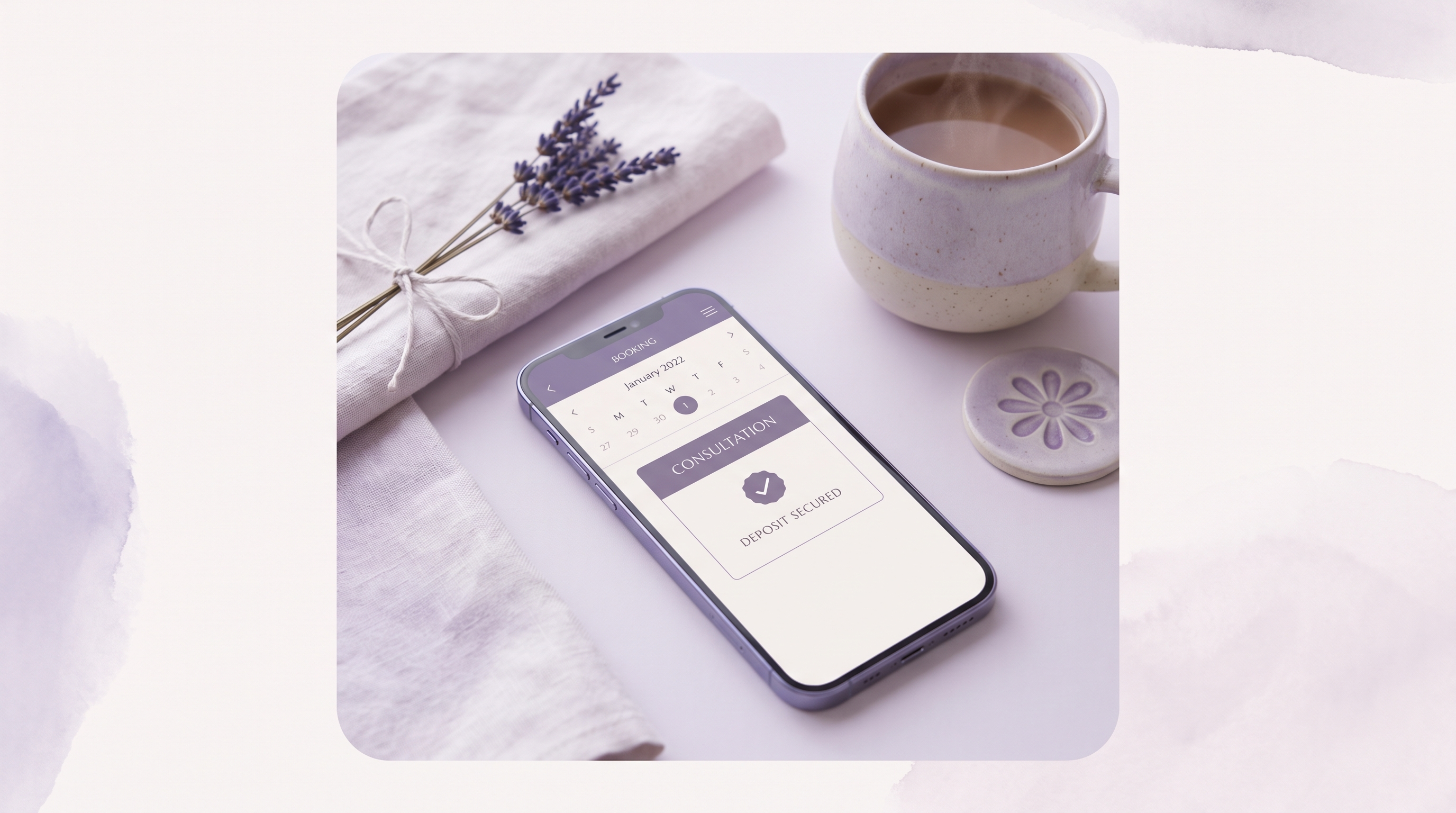
Taking a deposit for appointments is one of the simplest ways to protect your time and reduce no-shows — and done well, it rarely costs you a single client. The principle is straightforward: ask for a small, fair payment (often 20–50% of the service price, or a flat figure like £10–£20) at the moment of booking, then deduct it from the final bill. Clients who have put something down almost always turn up, and those who genuinely can't make it tend to give you proper notice so you can fill the slot. This guide explains how to set deposits up fairly, what to charge, and how to word your policy so it feels reassuring rather than off-putting — whether you run a spa, a clinic, a therapy room, a barbershop or a tutoring practice.
Why deposits work (and why they don't feel mean)
An empty chair, treatment couch or therapy hour is income you can never recover. For a busy diary-led business, even two or three no-shows a week can quietly erase a meaningful slice of monthly profit. A deposit changes the psychology of a booking: it turns a casual "I'll pop in" into a genuine commitment. People value what they've invested in.
The worry most owners have is that asking for money upfront will scare clients off. In practice, the opposite tends to happen. Serious clients understand it completely — they've paid deposits to restaurants, hotels and hairdressers for years. The handful of people a deposit deters are usually the same ones most likely to vanish on the day. You're not losing good custom; you're filtering out the chaos.
How much should you charge?
There's no single correct figure, but a few sensible benchmarks help. The right amount is large enough to feel like a commitment, yet small enough that nobody hesitates to book.
| Situation | Typical deposit | Why |
|---|---|---|
| Short, low-cost appointments (a trim, a quick consultation) | £5–£15 flat | Enough to secure commitment without friction |
| Standard treatments and sessions | 20–30% of the price | Scales fairly with the value of the slot |
| Long or high-value bookings (a half-day spa package, a course of treatment) | 50% or a fixed minimum | Protects a large block of time you can't easily rebook |
| New clients you've never met | Slightly higher than usual | First-timers no-show more often than regulars |
A common, well-liked approach is to take the deposit and simply subtract it from the total on the day, so the client never feels they're paying "extra" — they're just paying earlier. For medical and dental practices, a modest booking or admin fee that's redeemed against treatment achieves the same effect while staying comfortable for patients.
Writing a deposit and cancellation policy clients respect
The policy itself matters as much as the amount. Vague rules cause arguments; clear, kind ones almost never do. A good policy answers three questions in plain language: how much, when it's refundable, and what counts as fair notice.
A simple template you can adapt
- The amount: "We ask for a £15 deposit (or 25% of your treatment) to secure your appointment. This comes off your final bill."
- The notice period: "Need to change or cancel? Just let us know at least 24 (or 48) hours ahead and your deposit moves to your new booking."
- Late cancellations and no-shows: "Deposits for cancellations inside 24 hours, or missed appointments, are non-refundable — this covers the time we held for you."
Notice the tone: it explains the why ("the time we held for you") rather than simply laying down the law. Clients are far more willing to accept a rule when they understand the reasoning behind it. Choose a notice window that genuinely lets you refill the slot — 24 hours suits a barber or salon, while clinics, tutors and therapists running longer sessions often prefer 48.
The practical bit: how to actually collect deposits
This is where many owners get stuck. Taking deposits by hand — chasing bank transfers, scribbling who's paid in a paper diary, remembering to deduct it later — is more hassle than the no-shows themselves. It's also easy to forget, and awkward to ask for over the phone.
The far smoother route is to let clients pay as they book. Good booking software (like Appoint Me, launching soon) handles the whole cycle automatically: it collects the deposit at the point of booking, records exactly who has paid, sends a receipt, and remembers to subtract it from the final total. No spreadsheets, no awkward "have you paid yet?" conversations, no mental arithmetic at the till. The client books at 11pm from their sofa, pays their deposit, and you simply see a confirmed, secured appointment in the morning.
If you're not yet using software, a few interim tactics help:
- Send a payment link by text or email straight after booking, with a deadline ("your slot is held for 24 hours until the deposit clears").
- Keep a single, consistent record of who has paid — never rely on memory across a busy day.
- Always confirm in writing what the deposit was and that it'll be deducted, so there's no confusion later.
Handling the awkward moments
Even the fairest policy meets the occasional unhappy client. Two situations come up again and again, and both are easy to navigate.
The genuine emergency
Someone's child is ill, or they've had an accident. Holding firm here costs you goodwill for the sake of £15. A quiet bit of discretion — "of course, let's just move your deposit across" — buys enormous loyalty. Make exceptions human, not automatic, and keep them genuinely rare.
The serial offender
Occasionally someone repeatedly cancels late or rebooks endlessly. This is exactly what your policy is for. A non-refundable deposit, applied calmly and consistently, either changes their behaviour or gently filters them out — and protects the regulars who'd happily have taken that slot.
A quick checklist before you start
- Decide your amount (flat fee or percentage) for each type of appointment.
- Set a notice window you can realistically refill — 24 or 48 hours.
- Write your policy in warm, plain English and explain the reasoning.
- Display it where clients see it before booking: your website, booking page and confirmation messages.
- Pick a reliable way to collect and track payments — ideally automated, so nothing slips.
- Allow room for genuine emergencies, but apply the rule consistently otherwise.
Deposits aren't about squeezing clients or guarding against them — they're about treating your own time as the valuable, finite thing it is. Set them fairly, explain them kindly, and collect them smoothly, and you'll find your diary fills with people who actually turn up. That's better for your income, your stress levels, and the clients who never had any intention of letting you down.
Run a salon, spa, clinic or practice?
Appoint Me is the feel good booking system — launching soon for every appointment business. Be first to know.
Register your interest