Blog · Running your business
Client intake forms: what to ask before a first appointment
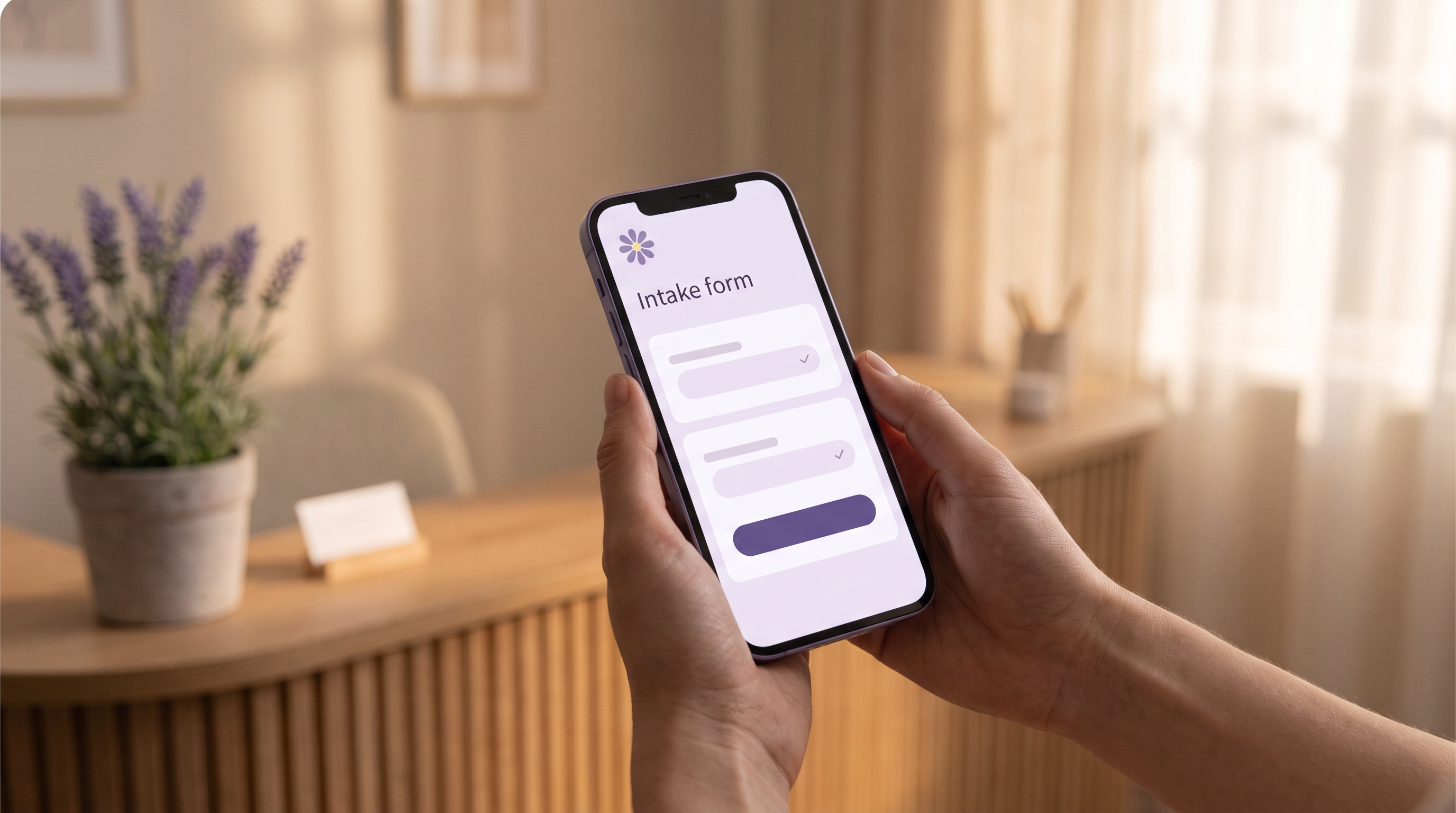
A physiotherapist welcomes a new patient at nine o’clock and already knows the injury, the medication that matters and the goal — back playing five-a-side by spring — because a short intake form arrived with the booking confirmation and was filled in from the sofa two days earlier. That is the whole job of a client intake form: it moves the paperwork out of the appointment, so the time the client has booked is spent on the work itself.
A good intake form asks only what the first appointment genuinely needs: who the client is and how to reach them, why they have booked, anything that affects safety — allergies, medication, relevant medical history — and what a good result would look like to them. Done well, it takes about five minutes on a phone, goes out automatically the moment the booking is made, and comes back answered before the day arrives. Here is how to build one that earns its keep, whether you run a clinic, a counselling practice, a spa, a tutoring diary or a barber’s chair.
What a good intake form gives you
The obvious win is a prepared first appointment. You open the diary, glance at the answers, and start the session already knowing the essentials instead of spending the first ten minutes gathering them. Across a full day of new clients, that reclaimed time adds up to a meaningful amount of paid work.
The less obvious wins are often bigger:
- Safety information arrives early. A colourist learns about the allergy while there is still time to book a patch test. A massage therapist learns about the pregnancy before the table is set up. A tutor learns about the dyslexia diagnosis before choosing materials.
- The client record starts on day one. Everything a client tells you before the first visit becomes the foundation of their notes, rather than something half-remembered and scribbled down afterwards.
- New clients feel expected. Being asked thoughtful questions before a first visit signals that the appointment is being taken seriously — which is exactly the first impression an independent business wants to make.
The questions that earn their place
Every business is different, but the strongest intake forms share a common core, then add a small number of questions specific to the work.
For every appointment business
- Name, mobile number and email address.
- The reason for booking, in the client’s own words. One open text box outperforms a dozen tick-boxes here.
- Anything they think you should know before the appointment.
- How they heard about you — one tap to answer, and over a year it builds into your most honest marketing report.
- Permission to contact them about their appointments, so confirmations and reminders can do their job.
Additions by business type
| Business | Worth adding |
|---|---|
| Dental & medical practices, clinics | Medical history, current medication, GP details, previous treatment for the same issue |
| Therapists & counsellors | What brings them to therapy now, any previous support, an emergency contact |
| Spas & massage studios | Health conditions, pregnancy, recent injuries or operations, pressure preference |
| Salons & barbers | Colour history, known allergies and patch-test dates, a photo of the current cut or colour |
| Tutors | Exam board and target grade, current working level, any learning needs and how the student learns best |
When to send it: with the booking confirmation
The best moment to ask is the moment the client books. They are thinking about the appointment right then, the details are fresh, and completing a short form feels like part of securing the slot rather than an extra chore. A form that goes out with the booking confirmation gets finished; one that waits until the night before competes with dinner, children and television.
If the form has not come back within a couple of days, a single friendly nudge alongside the appointment reminder is enough — something like “It helps us make your first visit brilliant.” And it is worth keeping a graceful fallback for the handful of clients who never fill anything in online: a tablet at reception, or five unhurried minutes at the start of the first session. The form serves the appointment, never the other way round.
Keep it short enough to finish at the kettle
A useful test for every question: will the answer change what happens in the first appointment? If it will, it stays. If it is merely interesting, it goes. Date of birth matters to a dentist; it rarely matters to a barber. A forty-question form feels like homework, and half-finished homework helps nobody.
Remember that the intake form only has to carry the first visit. The fuller picture — preferences, history, the way this particular client likes their coffee or their consultations — builds naturally in your notes over the following appointments. Aim for something a new client can complete standing at the kettle while it boils.
Look after the answers
Intake answers are personal data, and health details — medication, conditions, pregnancy, therapy history — count as special category data under UK GDPR, which deserves particular care. The principles are pleasingly simple: collect only what you need, tell people why you are asking, store it somewhere secure rather than in a folder under the reception desk, and keep it only as long as you have a genuine reason to. The Information Commissioner’s Office publishes plain-English guidance for small businesses that is well worth an hour of your time.
Digital storage helps enormously here. A form that lives in a booking system sits behind a login, attached to the right client, rather than travelling from clipboard to drawer to shredder — and when someone asks what you hold about them, the answer is a click rather than an archaeology project.
Let the form travel with the booking
The pattern that makes all of this stick is automation: the form goes out with the confirmation, the answers land on the client’s record before the visit, and an unanswered form triggers one polite nudge on its own. None of it relies on anyone remembering anything, which is precisely why it keeps working on the busy weeks when memory is the first thing to go.
This is exactly the sort of admin good booking software should carry for you. Appoint Me, the feel good booking system, is built for every appointment business — clinics, therapists, studios, salons, tutors, anyone with a diary — with that idea at its heart: the boring parts run themselves, so the appointment gets your full attention.
Start smaller than feels natural: contact details, reason for booking, the safety questions your work demands, and one open box for anything else. Send it the moment the booking lands. Within a month you will wonder how first appointments ever ran without it.
Related reading
Online booking vs phone bookings: which is right for your salon?
Online booking vs phone bookings for your salon: which wins for no-shows, after-hours bookings and loyal clients — and why the smartest salons use both.
15 June 2026
How to reduce no-shows at your salon (without nagging clients)
No-shows are mostly predictable. Reminders, a small deposit, a personal touch and a waitlist cut them dramatically \u2014 without chasing anyone.
15 June 2026
How long should an online booking take? A 30-second walkthrough
A good online booking takes a client under 30 seconds. See each step, from choosing a service to the reminder, and how to test your own page.
13 October 2026Run a salon, spa, clinic or practice?
Appoint Me is the feel good booking system for every appointment business.
See what Appoint Me does