Blog · Client retention
How to introduce a regular client to a new technician
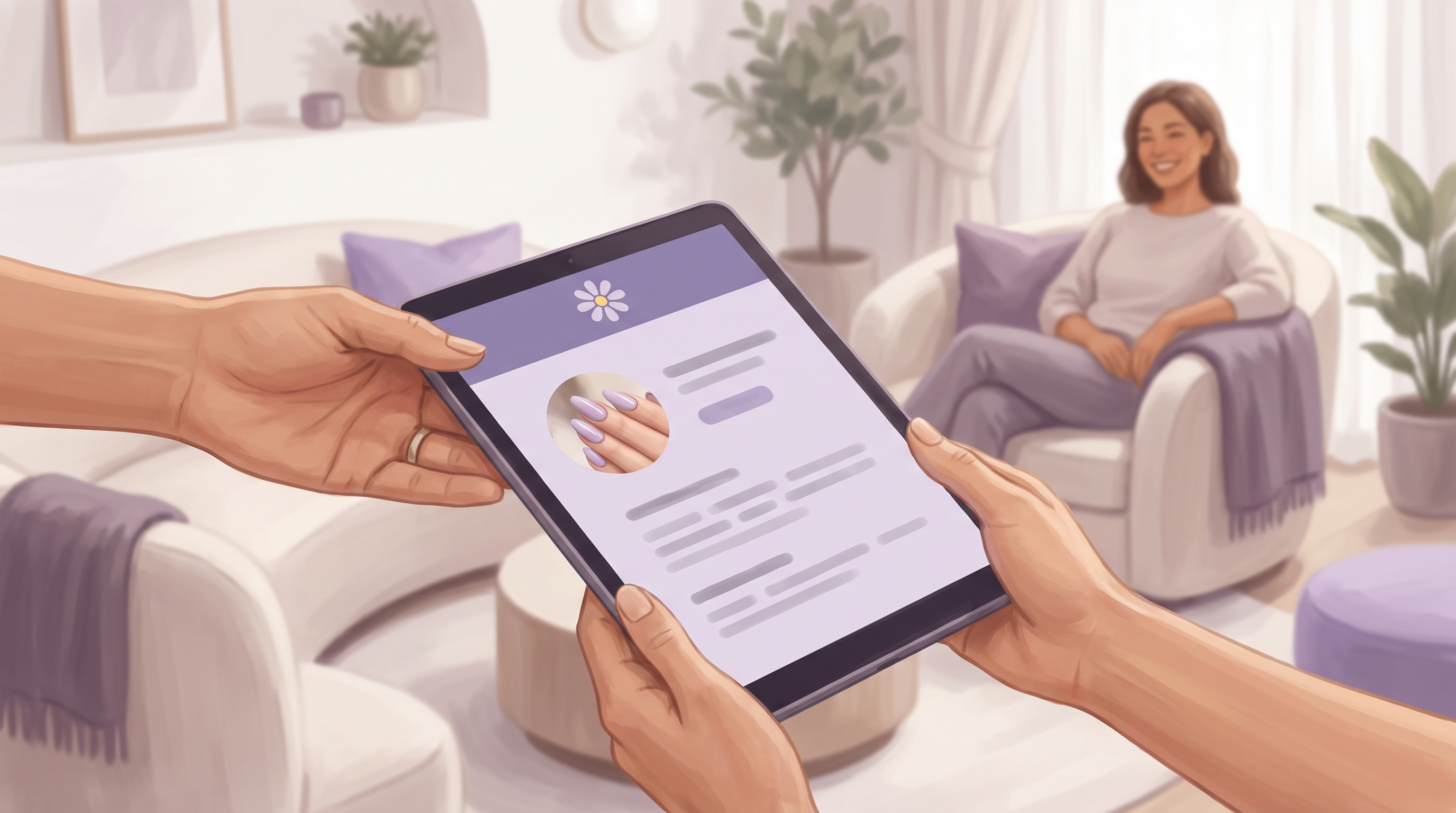
A newer technician can win over a ten-year regular in a single appointment when the client's usual is already written on the booking before she sits down. The situation comes up in nail bars, barbers, dental hygiene rooms and physio clinics alike: the familiar person is fully booked, a colleague takes the appointment, and every question about "the usual" drifts across the room to the person the client knows.
The way to introduce a regular client to a new technician is to make the handover visible and planned: the familiar practitioner introduces the new one in person, the client's usual service is written down where the new person can see it before the appointment starts, and the client keeps a clear way back to their favourite. Clients accept a new person when they can see their preferences have travelled with them.
Why do regular clients only want their usual technician?
A regular is booking the comfort of never having to explain herself. After ten years with one technician, the shape, the length, the shade and the small talk are all already known, and nothing has to be said. A new person, however skilled, means starting that conversation again, and the photo on her phone is her way of skipping it. When she holds it up to the person she trusts, she is asking for reassurance that what she normally has will still happen.
The same thing happens in a dental practice when a patient asks for "the hygienist I had last time", or in a tutoring centre when a parent wants the tutor their child already likes. The fix is the same in every case: give the client the reassurance directly, so they stop looking for it across the room.
How do you hand a regular over to a newer team member?
A good handover takes about two minutes and starts before the client sits down.
- The familiar person makes the introduction. A short, warm hello from the client's usual technician, with a line such as "I've told her exactly what you have, you're in good hands," does more than any amount of reassurance from the newcomer.
- The newcomer already knows the usual. Opening with "short almond in the soft lilac, same as last time?" tells the client her history arrived before she did. Asking "so what are we doing today?" tells her it did not.
- The client gets to see the work before it is finished. A quick check halfway through ("is the length right for you?") invites the comparison early, while it is easy to adjust.
- The usual technician checks in at the end. A glance at the finished result and a sincere word closes the loop and endorses the new person in front of the client.
None of this works if the newcomer has to rely on memory or a photo held up across the room. The client's preferences need to be written down somewhere the whole team can read.
What should a client note say so anyone can pick it up?
A useful client note is specific enough that a stranger could repeat the appointment. "Likes it natural" is not a note. "Short almond, gel, soft lilac, cuticles pushed not cut, prefers to chat less" is. For a barber that might be the clipper grade and how the neckline is finished; for a physio, which exercises the patient has already been shown and which ones aggravated the knee.
Booking software makes this far easier than a notebook behind the desk. In Appoint Me, every client has a private notes area that only the team can see, and a note can be set to appear on that client's next appointment, so whoever is looking after them reads the usual before the client arrives. The photo stops being something the client has to carry around.
Phone-photo handover versus a written client record
| What happens | Relying on the client's photo | A shared client note |
|---|---|---|
| Who knows the usual before the appointment | Only the regular technician | Anyone on the team who opens the booking |
| First thing the new technician says | "What are we having today?" | "Your usual, same as last time?" |
| Who the client turns to with questions | The person across the room | The person in front of her |
| What happens when the regular technician is on holiday | The client waits, or books elsewhere | The client is looked after as normal |
What if one technician is the one everyone asks for?
Most teams have one person every walk-in asks about first, phone held up hopefully. That popularity is good news for the business, but a single fully booked diary means turning people away while other chairs sit free.
The answer is to let clients choose, and make both choices feel good. An online booking page that lets a client pick a named person or simply take the earliest time with anyone free lets the devoted wait for their favourite while the flexible book straight away. Appoint Me works this way, and it also lets a senior be priced differently from a junior for the same service, which is a fair and open way to reflect demand. Showing the whole team on the booking page, with photos of real work and reviews from real clients, gives newer team members a chance to be chosen on their own merits.
How do you help a newer technician build their own regulars?
Every popular technician was once the new one. Clients follow evidence, so give the newer person some to show.
- Book them the clients who are open to trying someone new, such as first-time visitors and people who booked "anyone free", and let those clients become their regulars.
- Photograph their best work and add it to the gallery under their name.
- Ask happy clients to leave a review after the visit, so the feedback sits next to the technician who earned it.
- Pair them on a regular's appointment once, with the senior finishing off, before handing the next visit over in full.
Should you ever insist a regular sees someone else?
Rarely, and never by surprise. If the usual technician is leaving, retiring or reducing their hours, tell regulars early, let the departing technician recommend a successor personally, and book the first appointment with the successor while the original person is still around to introduce them. A client who is told in advance and introduced warmly usually stays. A client who finds a stranger in the chair with no explanation often does not.
For day-to-day busy weeks, offer the choice honestly: "Your usual technician is fully booked until Friday, and her colleague has 2pm today with your notes in front of her." Most people choose the sooner appointment once they know the new person already understands what they like.
If you want booking, client notes and team choice in one place, Appoint Me handles all three.
Frequently asked questions
How do I tell a regular client their usual technician is fully booked?
Tell them plainly and offer two options straight away: the next free appointment with their usual technician, or an earlier appointment with a named colleague who already has their notes. Mentioning that the colleague knows their usual service is the part that changes minds. Clients rarely object to waiting or switching; they object to feeling they have been passed to whoever was free without anyone checking what they like. Giving a name, a time and a reason respects the relationship they have with their usual person.
What should go in a client note for a nail or beauty appointment?
Write what someone else would need to repeat the appointment without asking: the shape and length, the product system, the colour or the colour family the client tends to choose, anything they dislike, any sensitivities or allergies, and how chatty they like the appointment to be. Add a photo of the finished result where your system allows it. Keep the note factual and kind, because clients have a right to see the personal data a business holds about them, and the note should read well if they ever ask for it.
Is it rude for a client to ask for a different technician?
No. Asking for a familiar person is a sign of trust in that person, not a judgement of anyone else. Treat it as useful information. The better response is to make the alternative appealing: introduce the colleague in person, show that the client's preferences have been passed on, and let the client see the work early. Most clients who are looked after well by a newer technician are happy to book them again, especially when it means an earlier appointment.
Should senior technicians charge more than junior ones?
Many appointment businesses price by level, and it is a fair way to manage demand when one person is booked far ahead. A client who wants a particular senior pays for that choice, while a client who wants the earliest slot can book a junior colleague at a different price. The important thing is clarity: show the price for each person at the point of booking so nobody discovers the difference at the till. Booking software that supports per-staff pricing does this automatically.
How can a booking page help clients try someone new?
A booking page that shows the whole team, with photos of their work and reviews from real clients, lets people choose a newer technician on evidence. Offering an "anyone free" option alongside named people also helps, because clients who care most about the time will book the first available person and often become that person's regulars. Over a few months, the diary spreads more evenly across the team without anyone being pushed.
What is the best way to handle a technician leaving the business?
Give regular clients notice, ideally a few weeks, and have the departing technician recommend a specific colleague to each of their regulars. Book a first appointment with that colleague while the original technician is still working, so they can make the introduction and check the result. Make sure all client notes are up to date before the last day. Clients follow people they trust, so a personal recommendation from the person who is leaving is the strongest reason for them to stay.
Related reading
How long should an online booking take? A 30-second walkthrough
A good online booking takes a client under 30 seconds. See each step, from choosing a service to the reminder, and how to test your own page.
13 October 2026
How to write an appointment cancellation policy clients actually follow
A clear cancellation policy sets one notice period, says what happens to deposits and shows before booking. How to write one for any appointment business.
1 October 2026
Fresha vs Treatwell (2026): fees, commission and the small print compared for UK salons
Fresha vs Treatwell for UK salons, checked October 2026: subscriptions, the 20% and 35% new-client commissions, card fees, notice periods and data export.
29 September 2026Run a salon, spa, clinic or practice?
Appoint Me is the feel good booking system for every appointment business.
See what Appoint Me does