Blog · Managing your diary
How to write an appointment cancellation policy clients actually follow
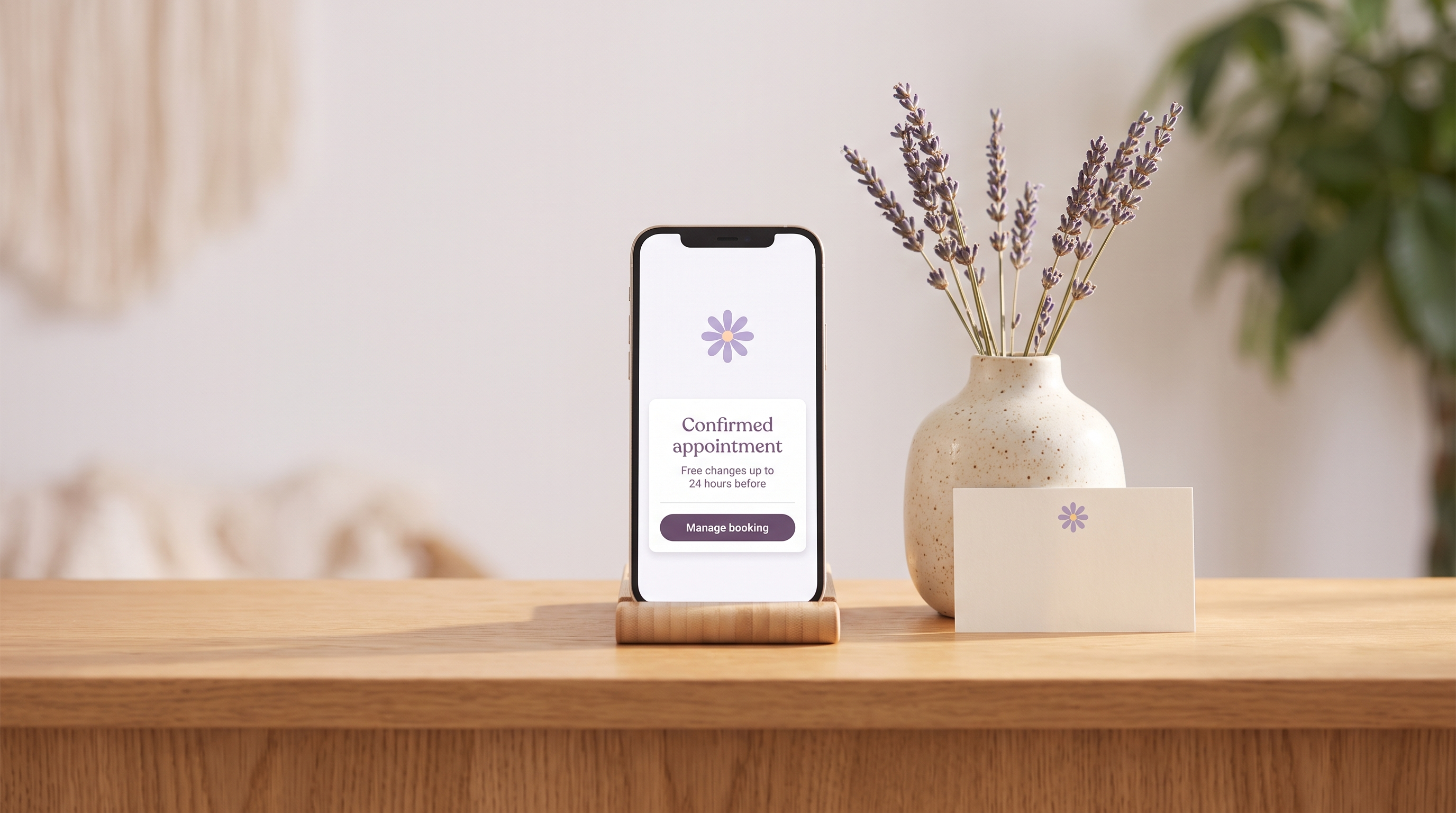
A physiotherapist in Bristol puts one line under the "Confirm booking" button: free changes up to 24 hours before, deposit kept after that. On Thursday evening a client moves her Friday 9am to the following week with two taps, and the slot is free for another client to book that same evening. Nobody had to make an awkward phone call.
A good appointment cancellation policy sets one clear notice period (usually 24 or 48 hours), says exactly what happens to a deposit or fee inside that window, and is shown to the client before they book, not after. It should be short enough to read in ten seconds, applied the same way to everyone, and easy to follow online without ringing you.
That definition works the same for a dental practice, a tattoo studio, a counsellor or a maths tutor. What changes from one business to the next is the notice period and the consequence, so the rest of this guide is about choosing those two things well.
What should an appointment cancellation policy include?
Every workable cancellation policy answers four questions, and a client should be able to find all four answers without scrolling.
- The notice period. How many hours before the appointment a client can cancel or move it free of charge.
- What happens inside that window. Whether a deposit is kept, a fee is charged, or the client simply loses the ability to rebook online.
- What counts as a no-show. For example, arriving more than 15 minutes late for a 30-minute appointment.
- How to cancel. A link in the confirmation email, a manage-booking page, or a phone number, ideally all three.
Write it in plain words. "Cancel or reschedule free of charge up to 24 hours before your appointment. Deposits for later cancellations are non-refundable" says everything a client needs in two sentences.
How much notice should clients give to cancel?
The right notice period is the time you realistically need to fill the slot. If a cancelled Saturday haircut gets snapped up within the hour, 24 hours is plenty. If a two-hour colour, a dental hygiene appointment or a first counselling session is hard to fill at short notice, 48 hours is fairer to you and still reasonable for the client.
| Type of appointment | Typical notice period | Why |
|---|---|---|
| Short, popular services (cuts, beard trims, brow tints) | 12 to 24 hours | Easy to fill at short notice |
| Long or high-value treatments (colour, facials, massage) | 24 to 48 hours | Harder to fill a two-hour gap |
| Clinical appointments (dental, physio, podiatry) | 24 to 48 hours | Practitioner time and room are both reserved |
| Therapy, counselling and tutoring sessions | 24 to 48 hours | Usually a regular weekly slot that is hard to reuse |
Pick one number per service type and stick to it. Different rules for different clients is where arguments start.
Should you charge a fee or keep a deposit for late cancellations?
Keeping a deposit is easier on everyone than charging a fee afterwards. The money has already changed hands, the client agreed to the terms before paying, and nobody has to chase an invoice for a missed appointment. A separate guide on how to take deposits for appointments covers setting the amount.
Whatever you choose, keep it proportionate. Under the Consumer Rights Act 2015, terms in a contract with a consumer must be fair and written in plain language, and a charge that is far larger than what a late cancellation actually costs you is the kind of term that can be challenged. Business Companion, the Trading Standards guidance site, explains unfair terms in more detail and is worth ten minutes of your time before you settle on a figure.
Where should clients see your cancellation policy?
The policy has to appear before the client commits, at the moment they confirm. A policy that only lives on a page called "Terms" is one most people never read, which makes it hard to enforce kindly.
The three places that matter most are the booking checkout, the confirmation email and the page where a client manages their booking. Appoint Me shows a business's own policy wording in all three, so the client reads the same sentence when they book, when the confirmation lands and when they go to change it.
How can online booking enforce the policy for you?
Online booking turns a policy from a rule you have to police into a setting. In Appoint Me, a business sets a cancellation window in hours. Outside that window, clients cancel or reschedule themselves online. Once a booking is inside the window, the client can no longer change it online, and your staff can still cancel or move it from the calendar on the client's behalf. That keeps room for judgement when someone rings with a genuine emergency.
The most useful effect is the one you never see. When changing a booking takes two taps, clients who cannot make it tend to say so early, which gives you a fair chance to offer the slot to someone else. A client who has to phone during opening hours often puts it off, then forgets.
How do you handle exceptions without losing goodwill?
Decide in advance what counts as a fair exception, so you are not making it up at the front desk. Illness, a family emergency and severe weather are the usual ones. A common approach is to waive the charge the first time and apply the policy from then on, recording the waiver against the client's record so the whole team knows.
Apply the policy to the situation, never to the person. A long-standing client who has never missed in three years deserves the same written rule as a first-timer, with the same discretion you would give anyone in the same circumstances.
How do you introduce a new policy to existing clients?
Give regular clients notice before the policy starts, with a short message explaining the reason: late cancellations leave gaps that other clients were waiting for. Put the start date in that message. From that date, every new booking shows the policy at checkout, so nobody can say they were not told.
Write your two sentences today, set the notice period that matches your longest appointments, and see how the booking flow at Appoint Me puts that policy in front of every client before they confirm.
Frequently asked questions
Is a 24-hour cancellation policy reasonable?
A 24-hour cancellation policy is reasonable for most appointment businesses and is the period clients are most used to seeing. It gives the business a working day to offer the slot to someone else, and it gives the client time to sort out a clash. Businesses with long or hard-to-fill appointments, such as two-hour colour services, dental treatments or weekly therapy sessions, often choose 48 hours instead. The important part is choosing one figure for each type of service, stating it before the client books and applying it to everyone in the same way.
Can I keep a deposit if a client cancels late?
Keeping a deposit for a late cancellation is common practice, provided the client agreed to the cancellation terms before paying and the amount is proportionate to what the late cancellation actually costs the business. The Consumer Rights Act 2015 requires terms in consumer contracts to be fair and transparent, so the policy should be written in plain language and shown at the point of booking. Business Companion, the Trading Standards guidance site, explains unfair contract terms for small businesses and is a sensible place to check your wording.
What is the difference between a late cancellation and a no-show?
A late cancellation is when a client tells the business they are not coming but does so inside the notice period, for example cancelling at 7pm for a 9am appointment under a 24-hour policy. A no-show is when the client does not arrive and gives no notice at all. Many businesses treat the two the same way for deposits, while others keep a deposit only for no-shows. Spelling out both in the policy, including how late a client can arrive before the appointment counts as missed, avoids disputes later.
Should a cancellation policy be different for new clients?
A cancellation policy works best when the written rule is the same for every client. Some businesses ask new clients for a deposit while regular clients book without one, which is a difference in payment, not in the cancellation policy itself. If you do treat new clients differently, say so clearly in the policy text so nobody feels singled out. Keep discretion for genuine emergencies and apply it consistently, whoever the client is.
How should a client cancel an appointment?
The easiest route for clients is a link in their confirmation email that opens a page where they can cancel or reschedule the booking themselves. A phone number should also be available for anyone who prefers to ring. When cancelling online takes seconds, clients tend to let the business know earlier, which gives more time to fill the slot. Booking software such as Appoint Me includes a manage-booking link in every confirmation email and closes online changes once a booking is inside the cancellation window.
Do clinics and therapists need a cancellation policy?
Clinics, therapists and tutors benefit from a cancellation policy as much as salons do, and often more, because their appointments are longer and harder to fill at short notice. A missed physiotherapy session or counselling appointment is practitioner time and a treatment room that nobody else can use. Many practices choose a 24 or 48-hour notice period and are explicit about whether a fee applies. Health professionals should also check any guidance from their professional body before charging for missed appointments.
Related reading
Recurring appointments: how to set up a series clients never have to rebook
Recurring appointments turn one booking into a series that repeats automatically, keeping tutoring, therapy and salon clients booked without extra admin.
27 August 2026
Appointment reminders that work: timing, wording and templates
The best times to send appointment reminders, what to say, and ready-to-adapt templates for clinics, therapists, tutors, salons and barbers.
20 August 2026
Moving from a paper diary to an online booking system: a practical guide
Move from a paper diary to an online booking system in five practical steps — what to copy across, when to switch, and how to bring clients with you.
30 July 2026Run a salon, spa, clinic or practice?
Appoint Me is the feel good booking system for every appointment business.
See what Appoint Me does